

May 4, 2026
uscapadmin
IRS Penalty Refund FAQ
Important Tax Notice for Business Owners
Did the IRS Charge You Unfair Penalties During COVID?
A federal court ruling may entitle you to a refund. Here’s everything you need to know.
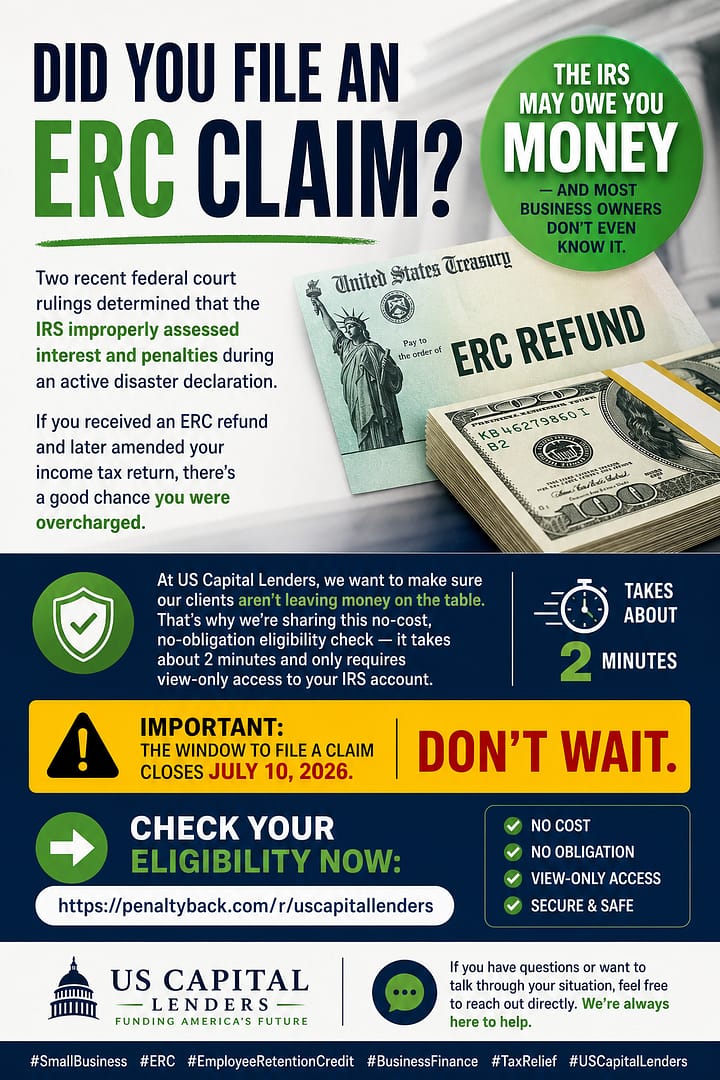
? What this is about: A federal court ruled in Kwong v. United States that millions of taxpayers were wrongly charged IRS penalties during the COVID-19 pandemic. If you or your business paid those penalties, you may be entitled to a refund — and there’s a free, automated way to check your eligibility in about two minutes.
Frequently Asked Questions
What exactly is IRS penalty abatement, and why does it matter to me?
+
Penalty abatement is the official process through which the IRS reduces or completely removes tax penalties it has assessed against you. If you’ve already paid those penalties, you may qualify for a refund.
This matters because IRS penalties — for late filing, late payment, or failure to deposit payroll taxes — can represent a significant portion of what you owe. Getting them abated can produce real, meaningful savings for your business.
What was the Kwong v. United States ruling, and how does it affect me?
+
A federal court ruled that millions of taxpayers were wrongly charged penalties during the COVID-19 period. The IRS had assessed these penalties even in circumstances where taxpayers had genuine hardship or disruption that should have qualified them for relief.
As a result, many individuals and business owners who paid those penalties during that window may be owed money back — but you have to check and file a claim. The IRS will not automatically issue refunds.
What types of penalties qualify for abatement?
+
The three most common penalties eligible for abatement are:
- Failure to File — assessed when a return isn’t filed by the deadline.
- Failure to Pay — assessed when taxes owed aren’t paid on time.
- Failure to Deposit — assessed when employers don’t remit payroll tax withholdings on time (this applies to businesses, not individual taxpayers).
An added benefit: when a penalty is abated, the interest that accumulated on that penalty is also removed — which can lead to even greater savings.
Who typically qualifies for penalty relief?
+
You may qualify under one of four relief categories:
- First-Time Abatement (FTA) — for taxpayers with a clean three-year compliance history who have filed all required returns and have arranged to pay any tax due.
- Reasonable Cause — for situations beyond your control, such as serious illness, natural disaster, or financial hardship during the pandemic.
- Statutory Exception — for taxpayers in federally declared disaster areas or combat zones, or who received incorrect advice from the IRS itself.
- Administrative Waiver — broad relief programs issued by the IRS, such as the COVID-era relief that benefited 4.7 million taxpayers.
Is there a cost to check if I qualify?
+
The eligibility check through PenaltyBack.com is completely free and automated — no upfront cost, no commitment, and it takes approximately two minutes to complete.
You only move forward if you’re actually eligible, and the service operates on a contingency basis, meaning there’s no fee unless you recover money.
How do I formally request a refund if I qualify?
+
For most first-time abatement requests, you can call the IRS directly using the toll-free number on your penalty notice. In many cases, they can approve the relief over the phone.
For other types of relief — including COVID-era refund claims — you’ll typically file IRS Form 843 (Claim for Refund and Request for Abatement) in writing, along with documentation supporting your claim. This is where having professional guidance can be valuable, as poorly prepared claims are frequently denied.
What are the odds the IRS approves the claim?
+
The IRS approves only about 11% of all penalty abatement requests it receives — which is why preparation and documentation matter enormously. However, for COVID-era claims supported by the Kwong v. United States ruling, the legal foundation is significantly stronger than a standard abatement request.
If your initial request is denied, you still have the right to appeal. A denied claim is not the end of the road.
Is there a deadline to file a claim?
+
Yes — refund claims with the IRS are subject to statutes of limitations. In general, you have three years from the date you filed your return or two years from the date you paid the tax, whichever is later, to file a claim for a refund.
The sooner you check your eligibility, the better. Waiting too long could mean forfeiting a refund you’re rightfully owed.
Find Out If the IRS Owes You Money
Free, automated eligibility check — takes about 2 minutes, no upfront cost.Check My Eligibility →
This FAQ is for informational purposes only and does not constitute legal or tax advice.
Please consult a qualified tax professional regarding your specific situation.
